October 23, 2026
Propaganda
Uncategorized
Uncategorized

Dogs and their Masters
In the city of Malden, there remains a few restaurants where you can spend less than $10 and still leave satisfied. In fact, at New York Pizza on Main Street, you can get a massive slice of pizza loaded with shredded buffalo chicken for $3! A whole cheese pizza runs $8.99.

The crust is ample and fluffy. The chicken is cheap but plentiful. Add some pepper flakes and the slices actually get pretty spicy! The blue cheese dressing isn’t overwhelming but definitely makes the slices a bit messy. You can opt for a plain cheese slice for $2!
The 3 dollar buffalo chicken slice at NYP is to die for. I usually work out at the YMCA down the street, swim in the refreshing cold water of the lap pool, steep in the hot tub for a while, and then, feeling tired but relaxed, wander on down to NYP for a delicious slice to cap off the day. I don’t even bring my wallet– I throw a couple bucks in my pocket alongside my YMCA access card and that’s all I need to have a good time downtown!
You can even order TWO slices of pizza, but that is a recipe for food coma.
Their salads are a good complement to the pizza. Their loaded buffalo chicken fries are to die for. The sandwiches look very good, but I have yet to order one. They have tons of deals throughout the week, so give them a shot!
WE LOVE NEW YORK PIZZA!!!!
Si la democracia es el gobierno de la opinión pública, y la opinión pública es formada por los medios de difusión que están en manos de los dueños del dinero, entonces democracia es igual a plutocracia.
“If democracy is the government of public opinion, and public opinion is formed by the media outlets that are in the hands of the owners of money, then democracy equals plutocracy.”
Last winter, I was dealing with the failure of my plan to travel to the Philippines and get with a beautiful young lady over there. I had met her online a number of years ago, and we were finally planning to meet up. Unfortunately, things fell apart and my heart was left desolate. Instead of being on a tropical island in the Pacific with my honey, I was once again facing down a brutal New England winter alone in my apartment. Amidst the anguish of those frozen days, I decided to come up with a plan to give myself something to look forward to.
That plan was called “The Bountiful Summer.”
It wasn’t so much as plan as it was an insistence that Summer 2026 would be awesome– filled with camping and fishing and hiking and making lots of money and meeting many beautiful women. While working the food pantry, my coworker and I would list all the amazing things we would do, and all the money we would make. So, as winter melted into spring and spring unfolded into summer the good times did indeed roll.
In order to enjoy the Summer, one must be outside. As a kid, I deplored hot humidity. I craved AC. Now I think AC is too cold! I have come to love heat now that I am almost 30. As a working man in these ladder days, I have a lot of experience being outside in the hottest temperatures ever recorded in Massachusetts, and let me tell you.. there is nothing better than a glass of ice water after a day of sweating under the sun!
We transformed our porch into a garden. I did some amateur woodworking and built a planter box on the summer solstice. I had to do it in a parking lot down the street so my neighbors wouldn’t freak out from all the hammering and swearing.

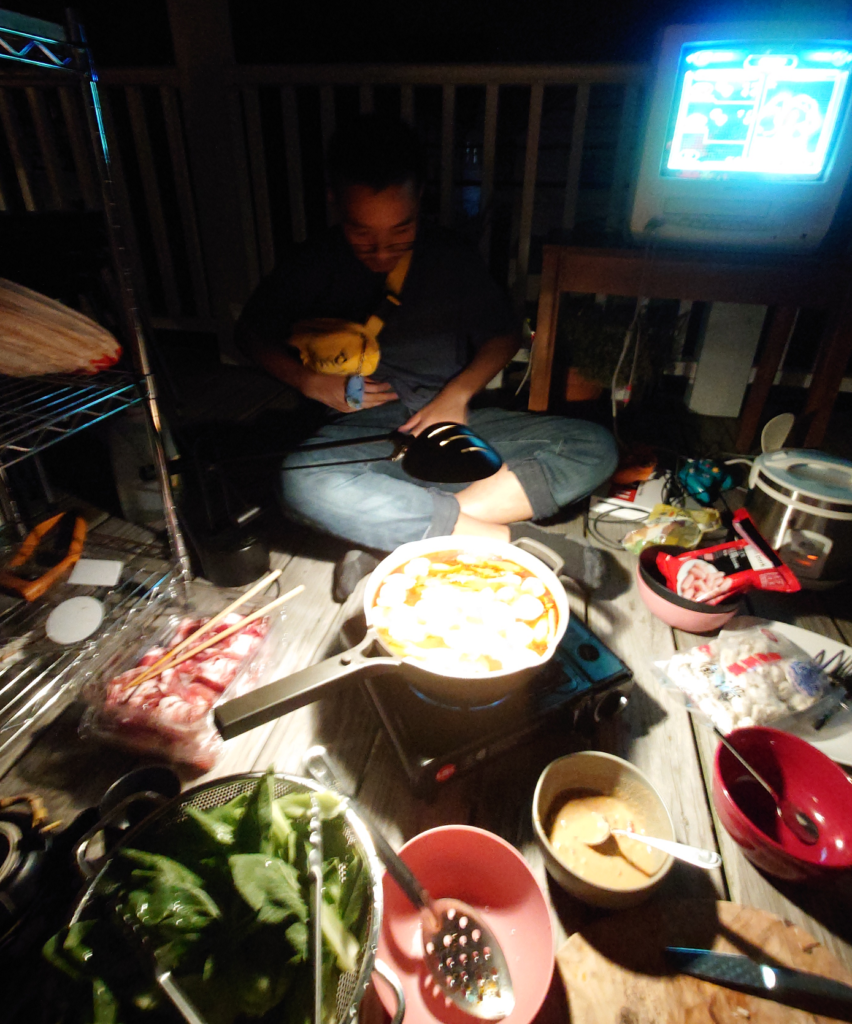
Anything is possible with an extension cord. We ran electric out onto the porch and played games out there. I spent many days off just lounging on the porch on a nice day, cooking with butane and enjoying a smoke as the clouds rolled by above.
I saw loads of fishermen out this year. Old men took their grandsons out for trout on Spot Pond, kids crossed the street in pilgrimage to the the Mystic River with poles slung over their shoulders. I went out too!
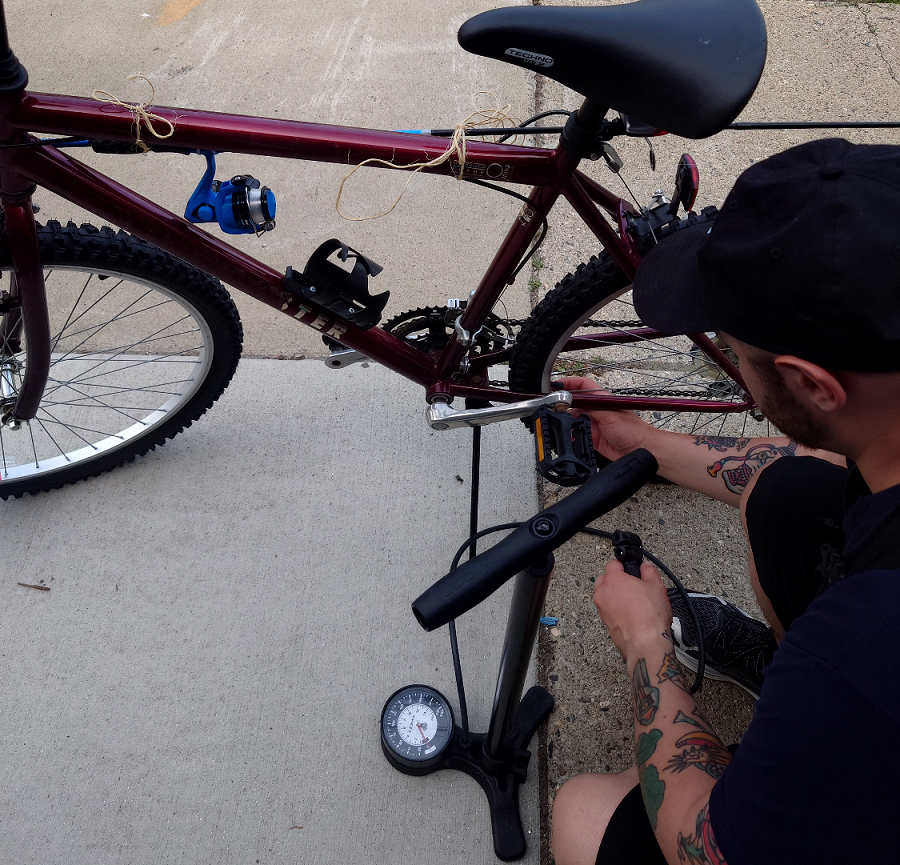
With poles tied to bikes, we rode across the greater Boston area in search of fishing spots. Justin wasn’t having much success at first, but he eventually caught the bug by the end of the Summer.
We didn’t catch much beyond sunfish this summer, if we caught anything at all. I tried night fishing for catfish and eels, to no avail. Our big break came in July when we decided to bring our poles out on a canoe riding down the Sunday River in Bethel, Maine.
Casting and waiting with a baited hook just wasn’t working, so we tied on a spoon and let the line drag behind us as we lounged down river. And IT WORKED! We landed a fallfish, also known as a chub!
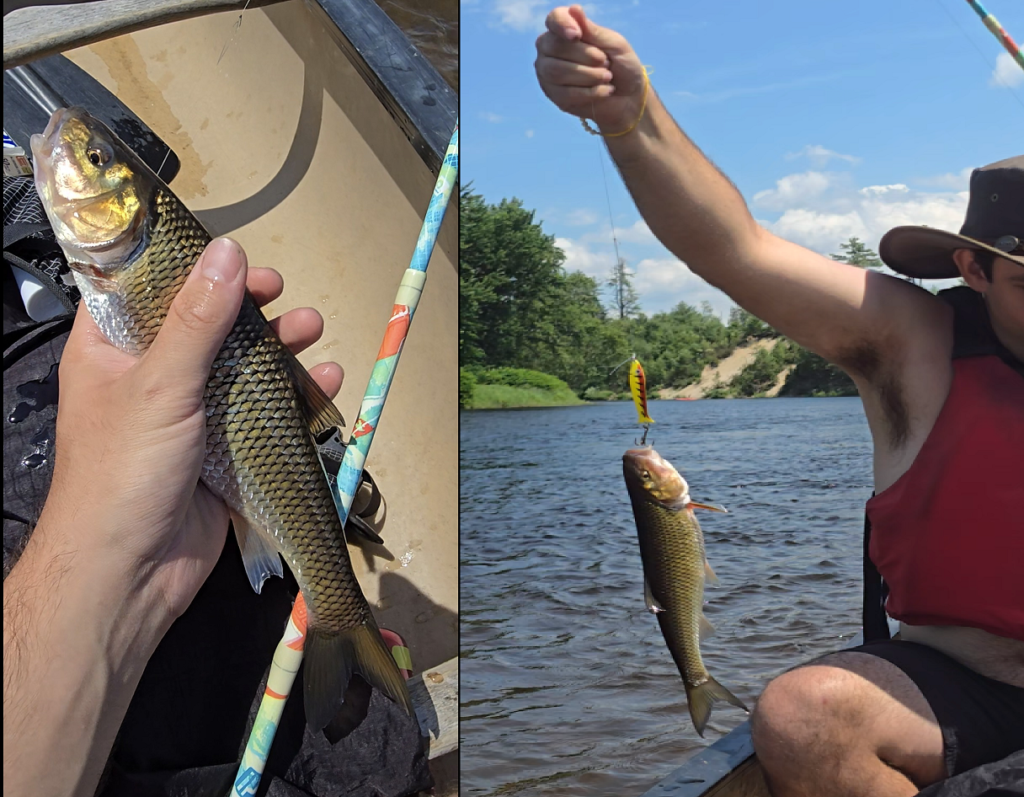
We had two more on-hook during the ride, but one jumped and lost the hook, the other may have been a log. After this success I was satisfied and didn’t fish as much. Justin kept it up though!
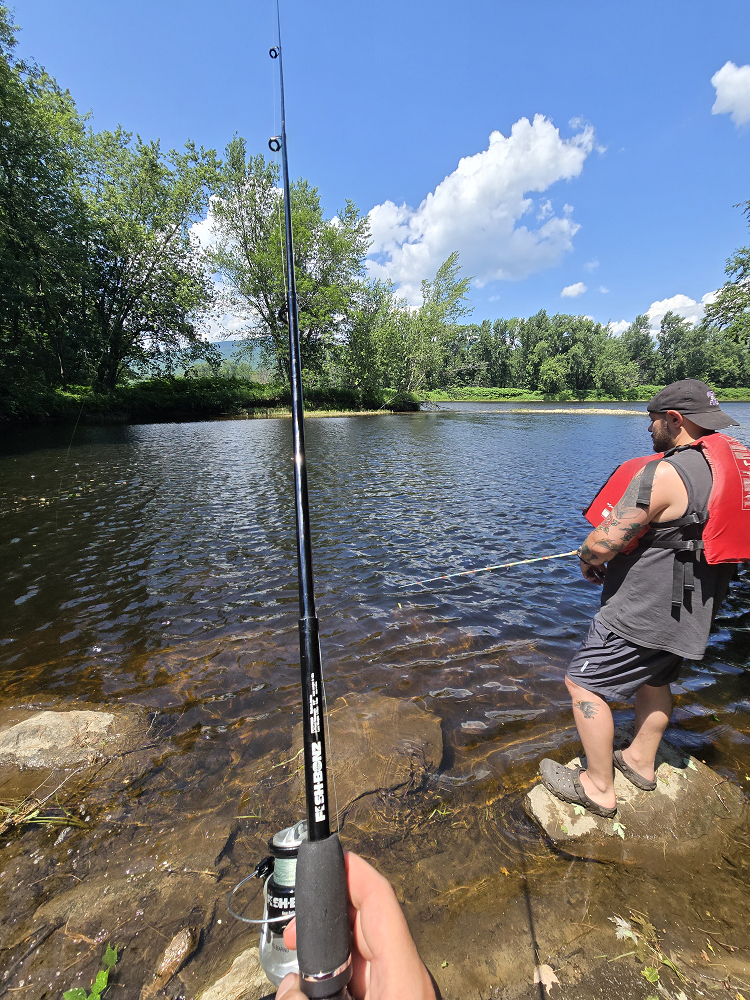
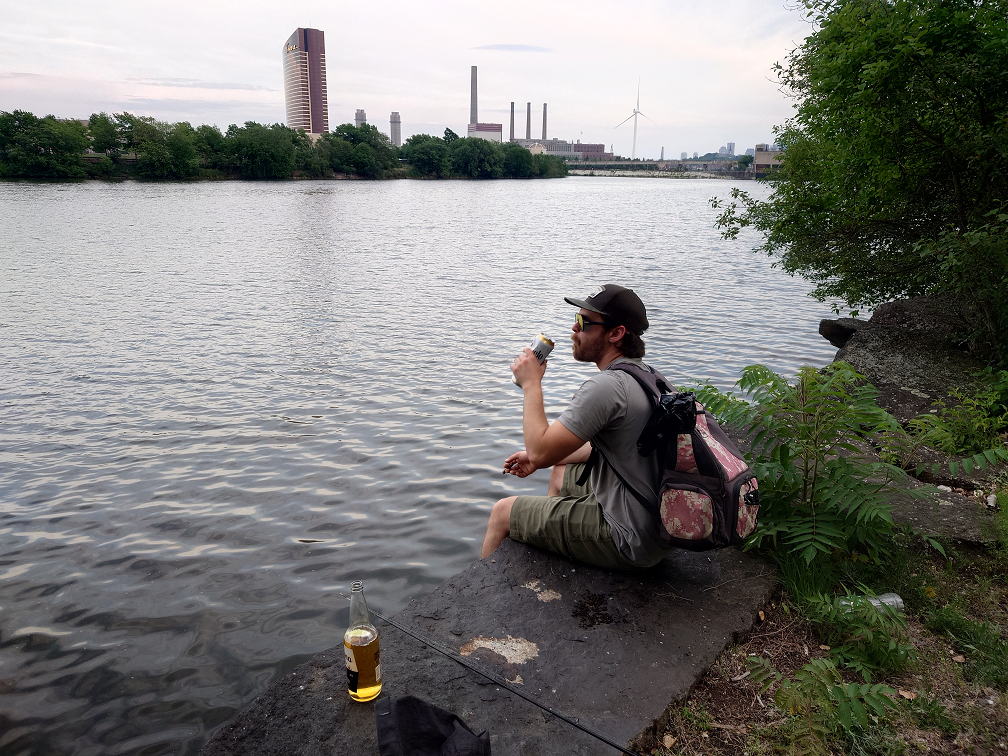
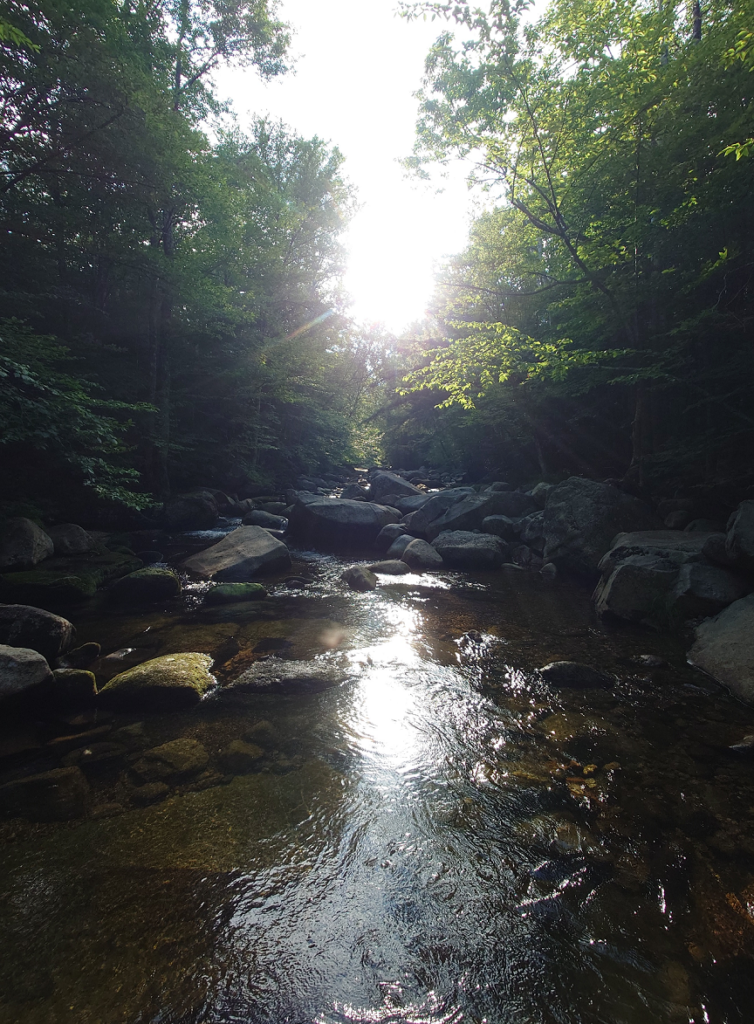
Canoeing on that river was phenomenal. That was maybe the best 4th of July I have ever had. We packed plenty of drinks and smokes and just cruised on down with the flow. We would stop at various points to swim or eat. We explored some islands and met some kindly folks that always asked if we caught anything. Trevor lost two of my spoons!
I’ve been a cyclist for quite a few years now. In fact, I bike every day to work in the evening. This summer was no different. I had three different bikes in my rotation.
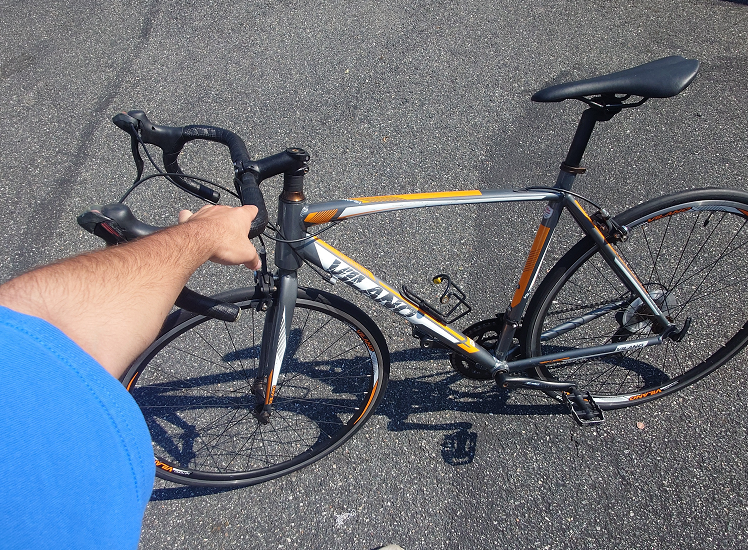
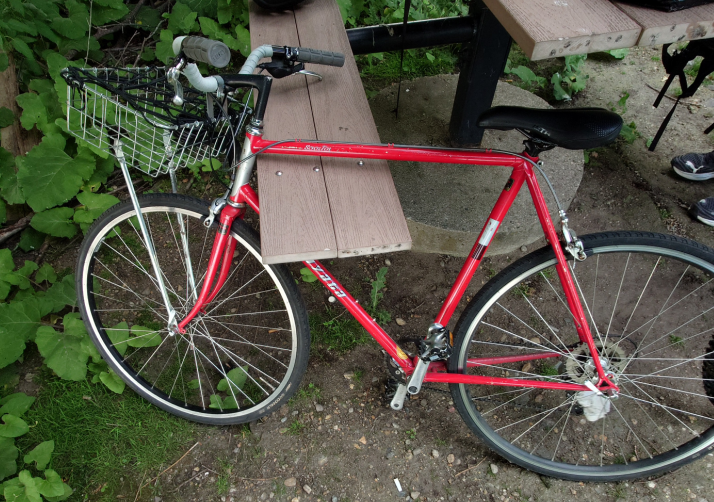
My third bike is largely out of commission due to neon orange chain and gears, but despite screaming whenever it is ridden it is still in-fact rideable in a pinch.

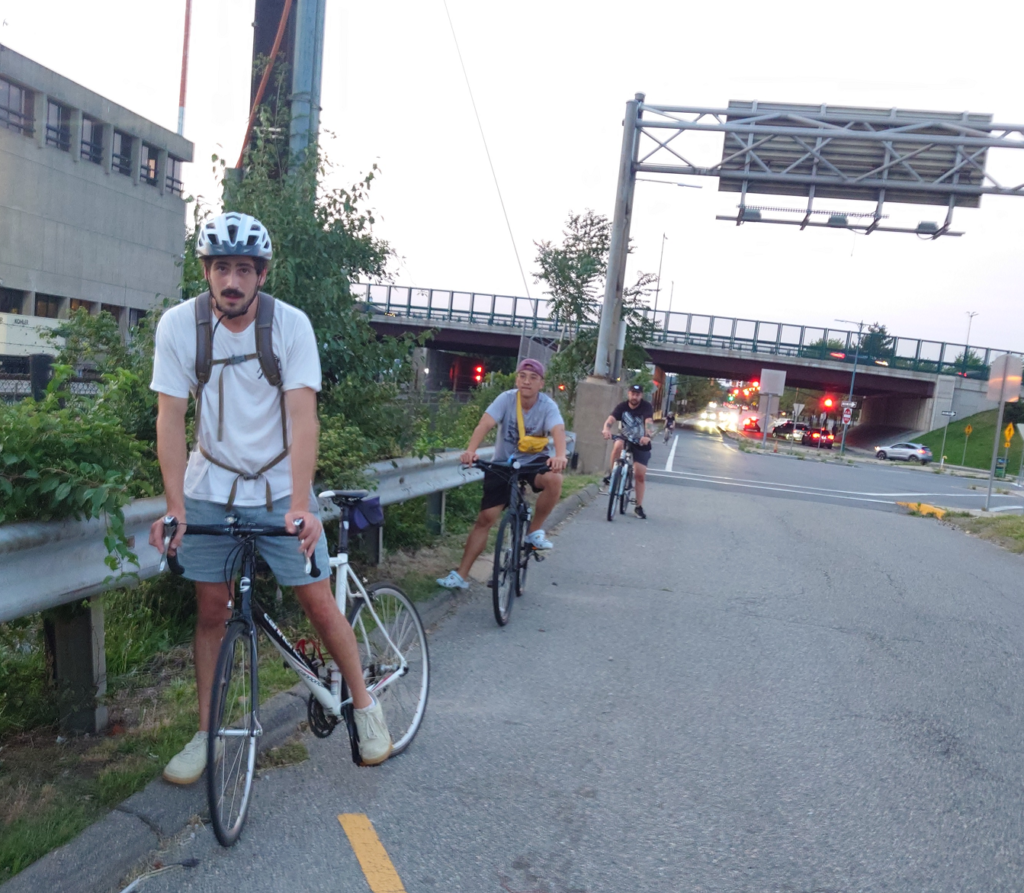
I had some monster rides. It turns out, Malden is connected directly to Lynn via bike trail, so I ripped a clean 25 mile ride there and back a couple times. I ended the summer with an amazing 30 mile ride from Medford to Brookline, across Boston to the North End, and then back up to Malden!
I’ve managed to avoid being hit by a car so far.
The World Cup had some games in Boston this year, and for the first time ever my friends and I were extremely hyped over soccer. We were playing soccer, betting on soccer, and even going to bars to watch games! A huge amount of Scottish people descended on our city and made everything joyful and chaotic for a while. Who knew soccer was a decent sport??
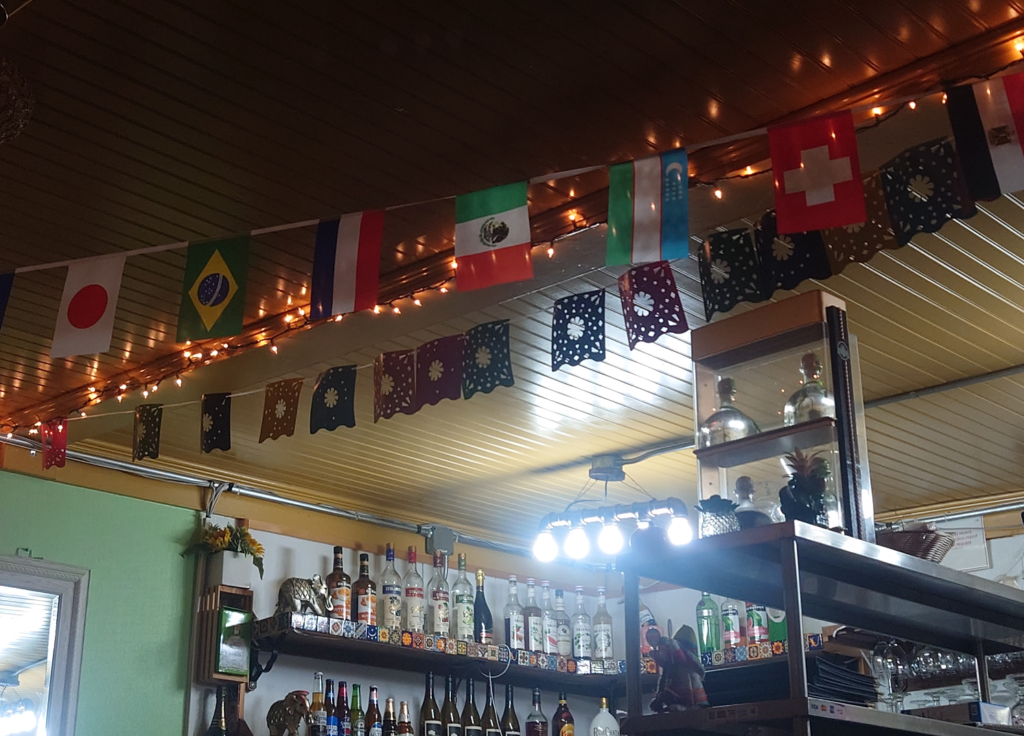
I put my money on Mexico, and we had an amazing run until England stomped us. INGLATERRA! ! ! CURSE YOU!
The most important development this summer was the resumption of my running career. Through this, I had a fateful encounter with a fellow running-enjoyer named Caroline.
Caroline is a tree of a woman that had just returned from a 6 year stint in Thailand teaching English and beating people up as a Muay Thai boxer. Forced to live in New England again, she came on to teach at the Thai boxing gym I also worked at in the evenings. We got along well enough– I tried to get to know her by buying her tacos. It wasn’t until we both helped run a Muay Thai tournament together in Connecticut that we really clicked– we both happened to go out for a run at the same time and realized we were both Strava users. We’ve been running together ever since.
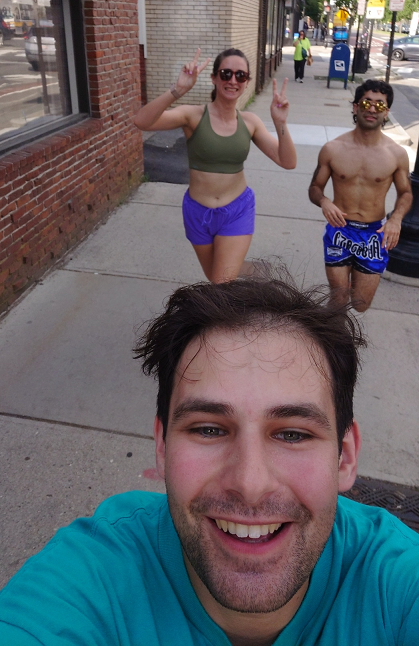
We eventually came up with a challenge to motivate us. We would each run every day and post our results on Strava. If one of us failed to run, they had to pay the other $50! And with that, I was running every day again and losing weight! I was working hard every single day of the summer!

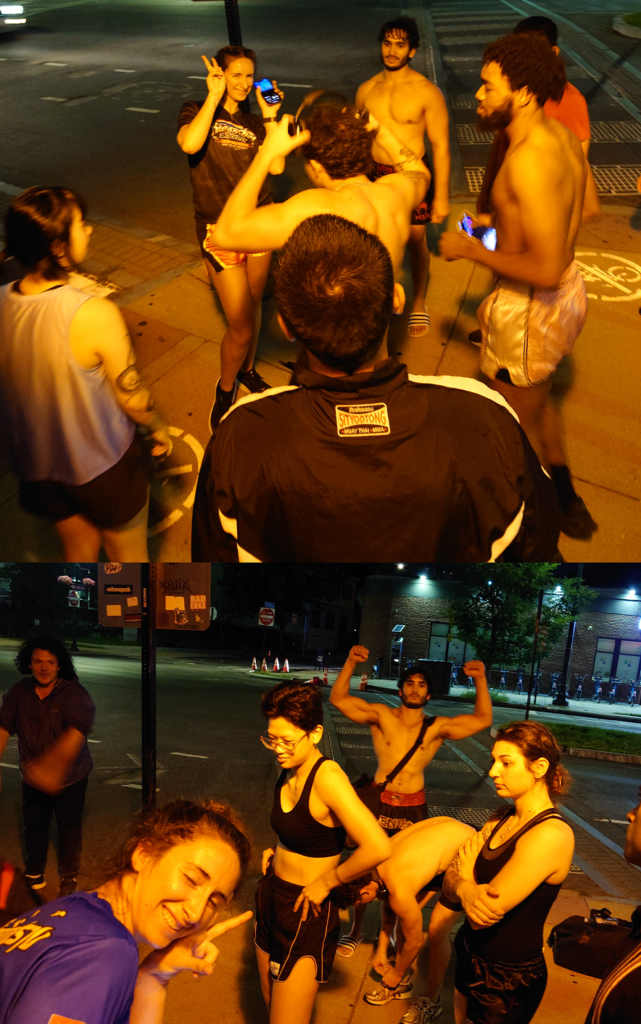
Running is contagious of course, and we eventually had a run club going at our gym! Every night, new people were running with me. People that claimed to hate running were suddenly finding that it wasn’t so bad. Community makes everything better.
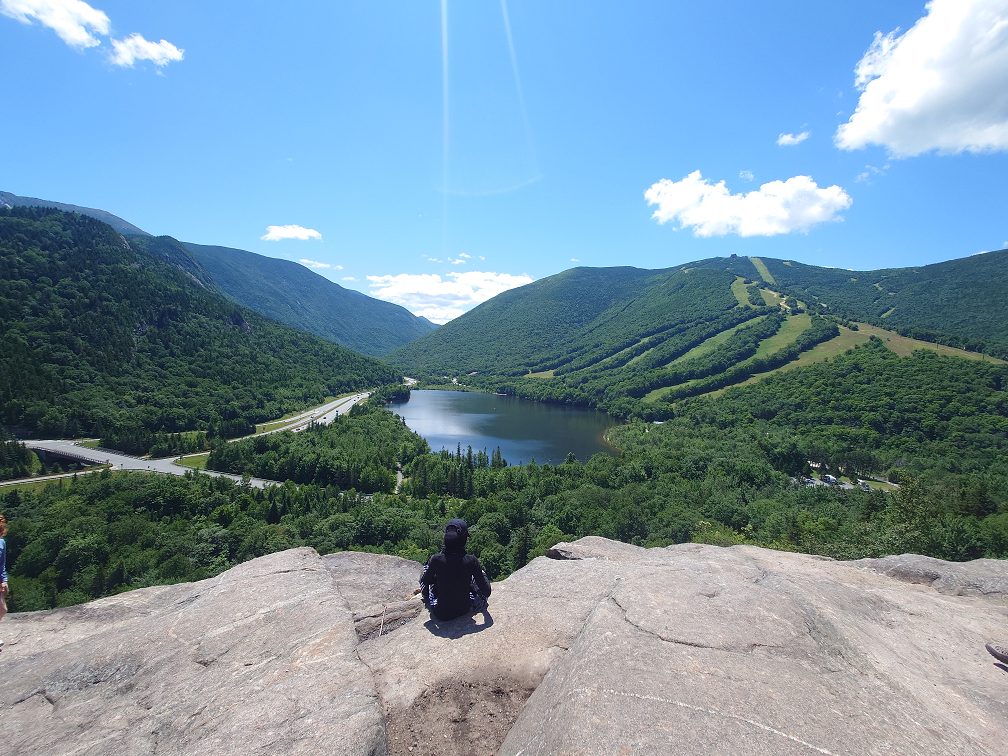
It turns out buying Caroline tacos was the greatest investment I ever made, because she returned the favor by inviting me up to her estate and treating me to an all expenses paid vacation in the White Mountains of New Hampshire. I saw Lake Winnipesaukee for the first time! We swam and drank beer and hiked and had an amazing adventure of it.
We were so active this summer that my leg blew up mid-August and I had to finally take a few weeks off. Let me tell you, weight comes back FAST!
I worked 6 days a week this summer, sometimes 7 days a week when my boss was out of town. I kept watch over things.
Life on the fish farm was a bountiful as ever.
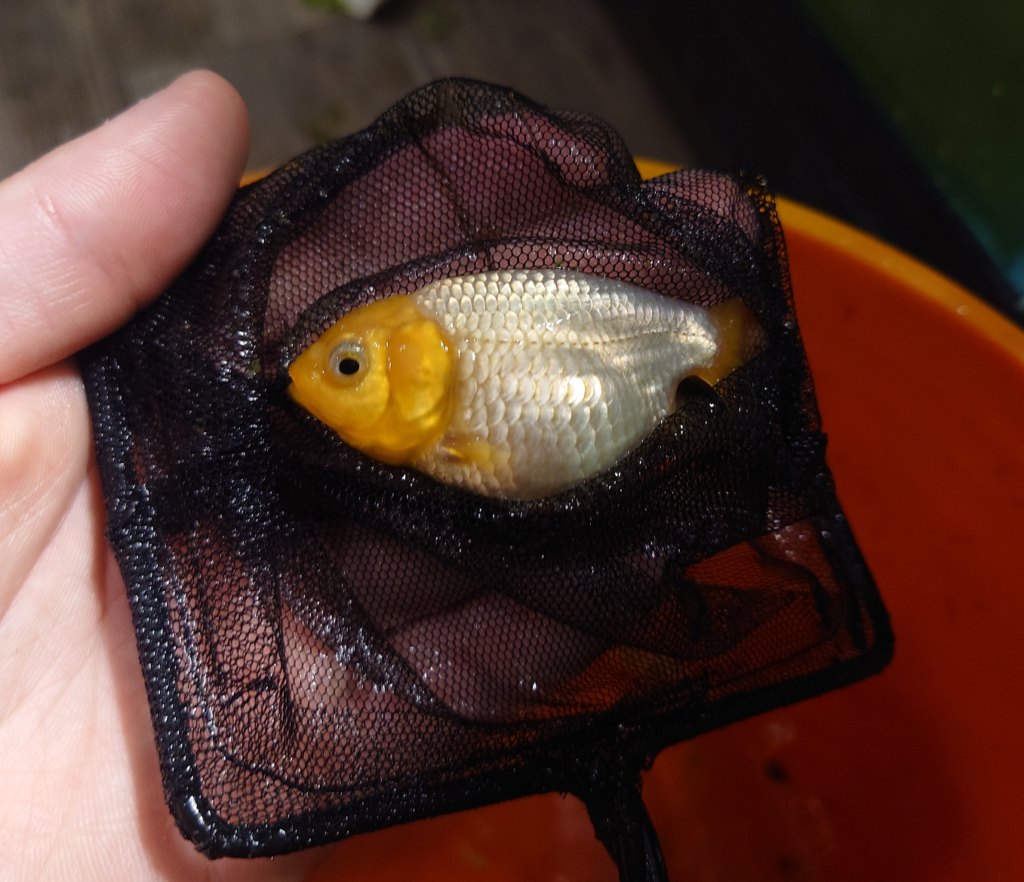
This was actually our first full warm season with the newly constructed greenhouse on the property. After slaving away with propane, log splitting, and diesel all winter just to keep the fish from freezing to death, we finally got to see the place explode with life. And the fish EXPLODED! They have never been brighter, fatter, or more lively in all the years I have been working here.
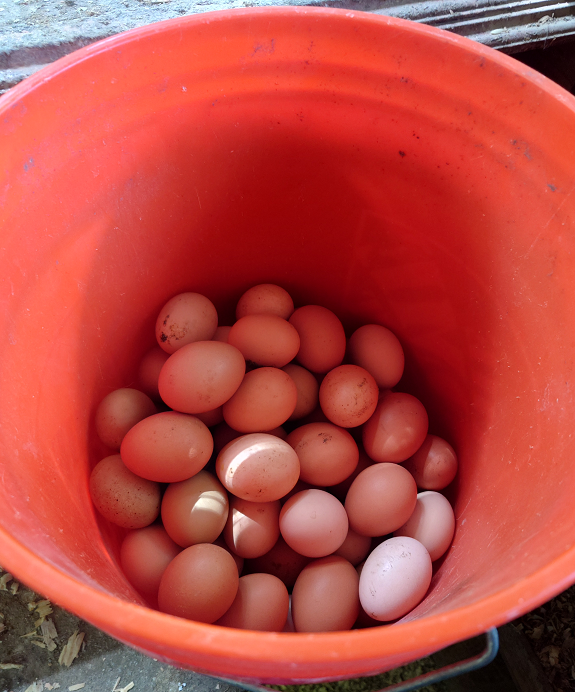
Unfortunately, my boss found himself in a funk this season and we did way more construction work than greenhouse work. I learned how to: demo drywall, install windows and doors, stuff rockwool into crevices, frame walls, re-install drywall, paint walls, fill nail holes with wood puddy, AND SO MUCH MORE! We dug trenches and ran power lines. It was exhausting.
In the evenings, I ran the front desk of a Muay Thai gym in Somerville. I like talking to the customers, but it gets dull sometimes. I have met a ton of amazing people through the gym, though, so I can’t complain. My favorite part was going out to the competitions and filming the fights. In a short time, we have developed an extremely dedicated fighting community.

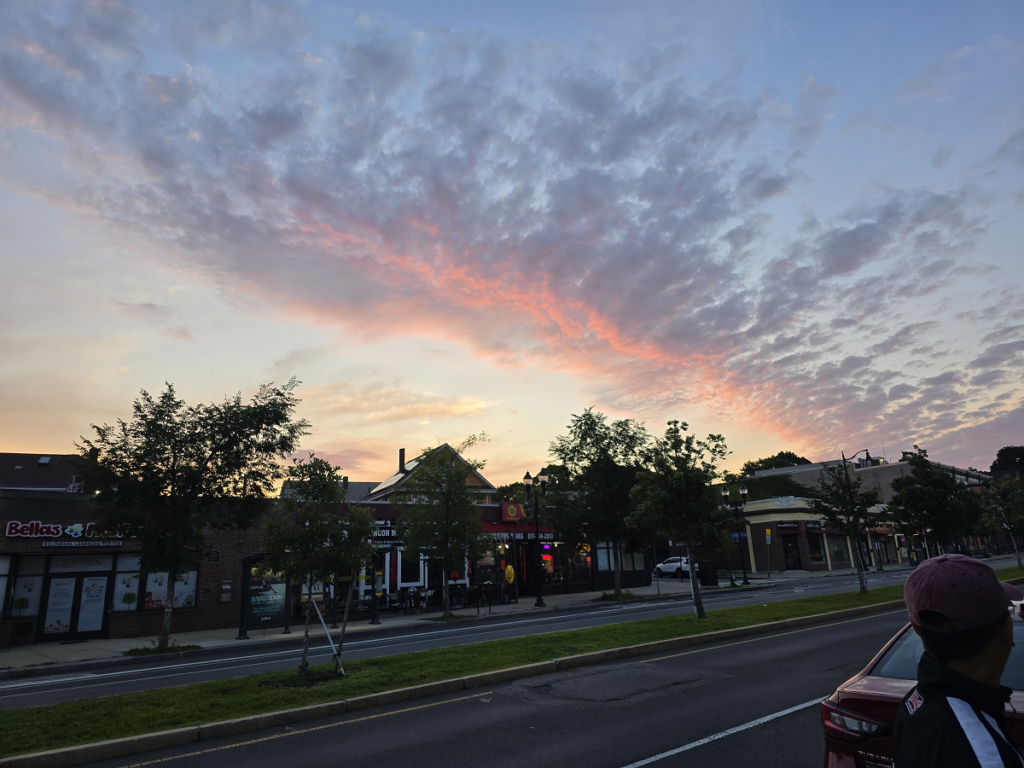
So we made some money this Summer, but not enough to make much financial difference. My savings are at about the same point they were in February. I set lofty goals every month, but something fun eventually always came up and I had no choice but to spend what I had earned. $1200 a month in rent doesn’t help.
And of course, I met a lot of pretty ladies over the course of the bountiful summer. Some of them even talked to me!
My goal was to meet women the old fashioned way. No apps. I don’t have Tinder or Hinge on my phone. I wanted to push myself to actually talk to people.
I spent a bit of time with a small latina. She made my heart soar, but in the end she kept us as just friends. We keep in touch to this day, but it makes me sad sometimes.
I got a couple of massages. The massages themselves were fine, but just having a lady touch me was the main draw I think. Reminds me I’m human. The contact is so fleeting though, and so expensive!
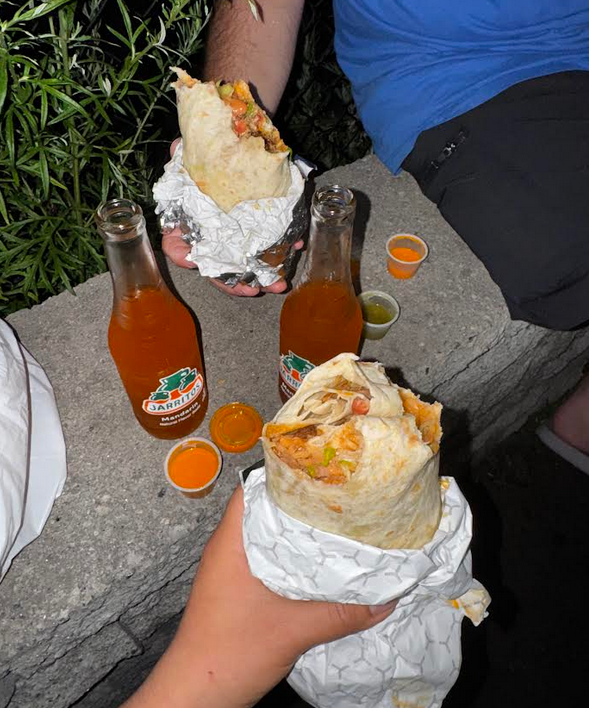
There was this Mexican bar I liked to go to for food and drinks, and the same lady always ran it. I learned that she was the owner’s daughter and wanted to run the place until she died. I worked up the courage to give her my number, but she never did text me.
It wasn’t until August that I got really lucky. A sweet young lady came into the gym looking to train Muay Thai, so I signed her up. She kept talking to me though, which, whatever, I’m the desk guy and everyone is always trying to shoot the shit with me. Then I learned that we both like urban biking and she even tolerates running! Like, 3 miles at a time type running. Her name was Cindy, and we kept this up for a while until one day she bought me chocolate! I guess I offered her water or something and she felt the need to return the favor? Whatever her intentions, the chocolate pierced my flesh and sunk straight into my heart and I gave her my number the very next night, and she eventually texted me after another day of anxious waiting.

I was in heaven. I had a girl that stayed up late and texted me– like actually reached out to me and wanted to shoot the shit late into the night. We like the same video games and appreciated working out. She was funny, a little demented, and laughed at my stupid bits. Lord almighty, these things are more than a man needs to survive! That 30 mile bike ride across Boston? I did it with Cindy! She didn’t complain at all! We caused so much traffic riding side by side, sharing tea and shooting the shit for mile after mile through the mean streets of Boston. After, she took a chance on me and came back to my place. We cuddled and watched The Departed, but neither of us remember what the plot was about. We stayed up most of the night, and she even let me smooch her.
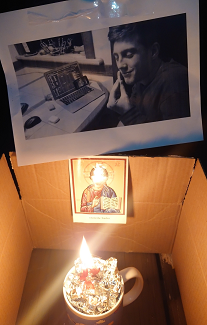
Mike died during the bountiful summer of 2026.
It happened suddenly. He died in his bed and was discovered during a wellness check 24 hours after nobody heard from him. He had texted me asking to hang out back in April but we never made it happen. He had just visited India with his colleagues from work, so I hope he had a bountiful summer too.
All great things do eventually end. In the last weeks of August, I could already smell it. A cool breeze carried it over Boston. The glorious clouds of August thinned out into thin bands of cloud impossibly high, and the sky became a solid, cold blue. The sun was hot, but the air was cold. I was biking with Cindy across the Encore bridge when we felt a shift in the atmosphere so sudden it was like a sheet being pulled off us. One moment, the air was warm and full of moisture, the next we were suddenly cold and moving through the chill air of fall.
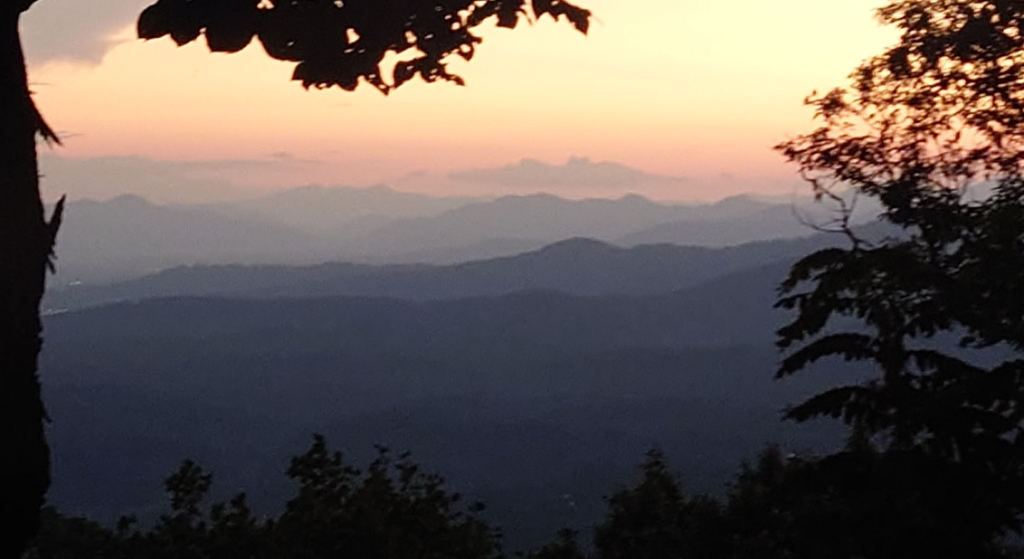
I traveled south to see my friend Ben for the first time in over a year. He had moved to North Carolina. I stopped in to check out Washington DC on the way, and it was mostly the same as last time. More armed military men and less water in the reflecting pool this time. The smokey mountains were more beautiful than I remembered, though. That first sunset down in NC took my breath away. We meant to hike and fish throughout the Blue Ridge Mountains, but my leg was getting on pretty bad. We ended up chilling a lot, which is what I needed I think.
I lost track of Cindy while I was away, and I realized upon my return that I didn’t mean as much to her as she meant to me. We grew apart and I blocked her ass instead of trying to keep another lady friend at arms length.
The Jewish high holidays came, and I ate lots of crisp apples dipped in a local honey so fresh it ran out of the jar like liquid amber. Yom Kippur fell exactly on the equinox this year, so I ended the summer with a fast. The temperatures are in the 60s now, and I have pulled out my sweatshirts. The bountiful summer is over. Fall promises to be gorgeous. My heart is as empty as ever, and solitude reigns.
Samaria must bear her guilt,
For she has defied her God.
They shall fall by the sword,
Their infants shall be dashed to death,
And their women with child ripped open.
– Hosea 14:1 from the Tanakh
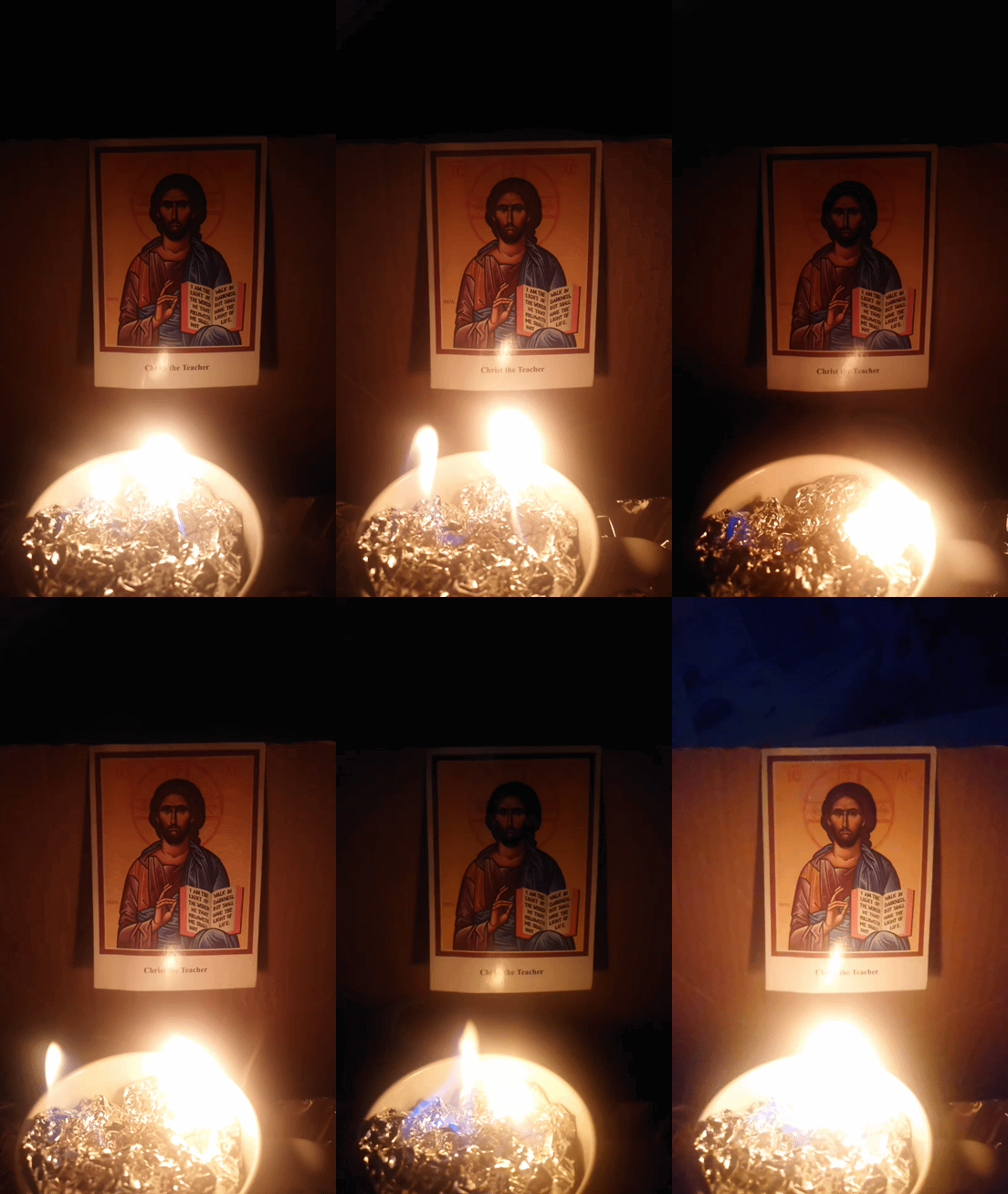
Miss you already. Sorry I didn’t write.
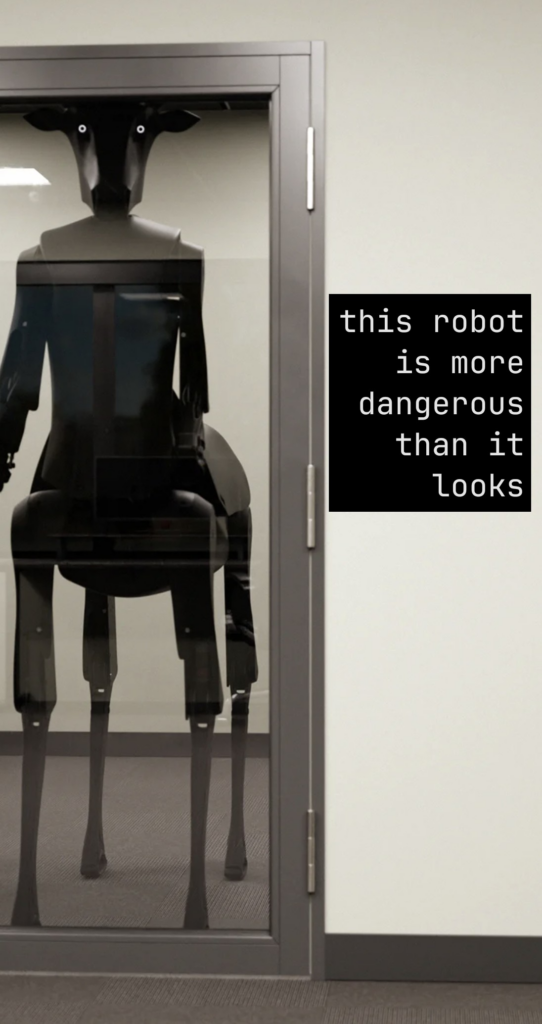
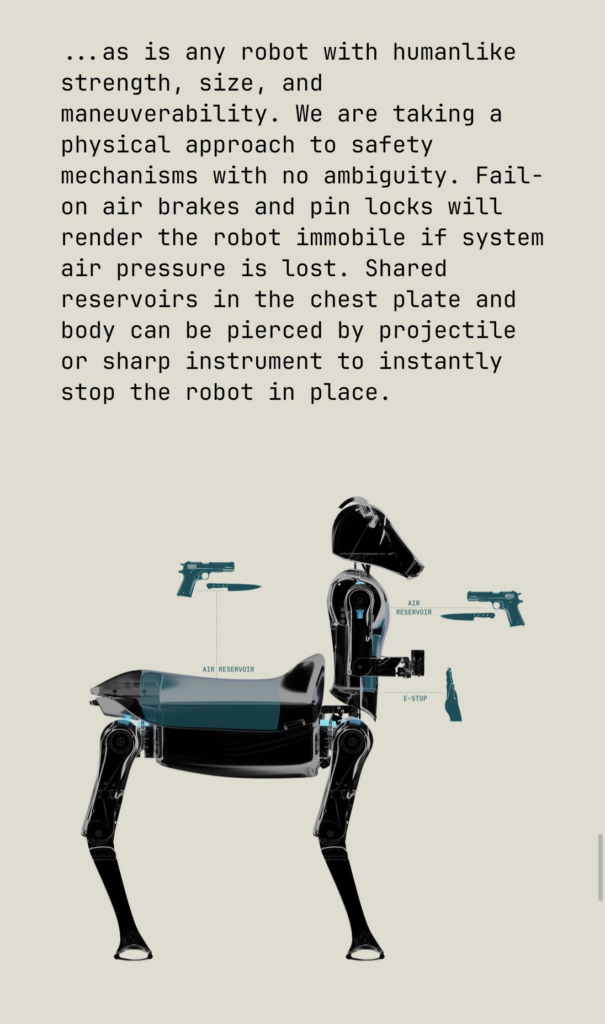
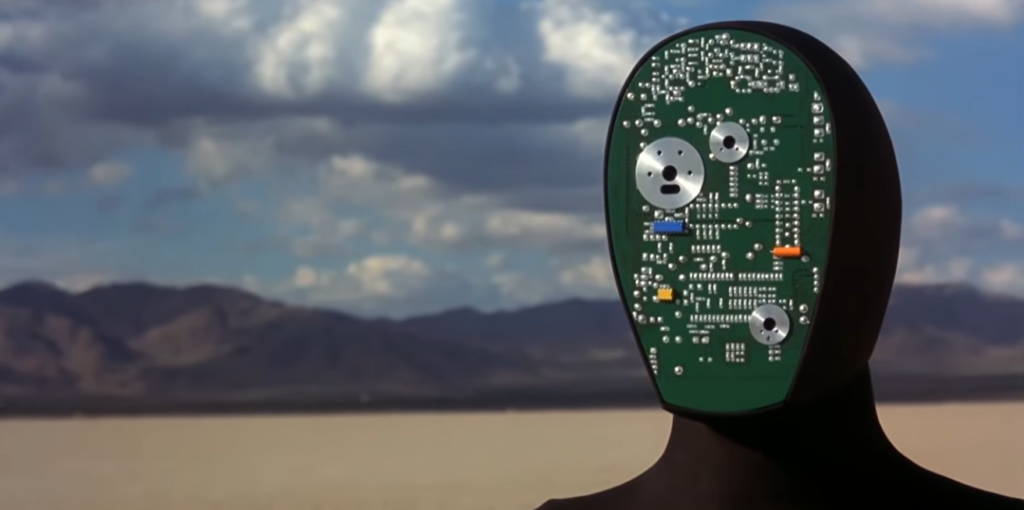
From the film Electroma with the album Human After All playing over it.

From the Criterion closet
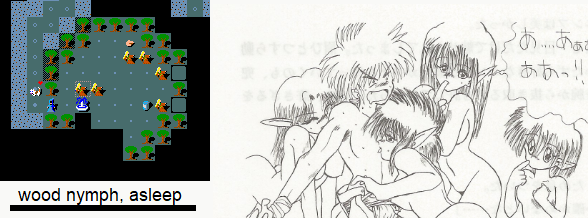
In NetHack, you will sometimes stumble upon wooded grottos nestled within the Mazes of Menace in the Dungeons of Doom!
These idyllic grottos are always infested, as far as I have observed, with wood nymphs. If you are careless and wake them, they will seduce you and steal your clothes and rare items.
They seem pretty harmless otherwise. They take what they want and vanish in a puff of smoke. You can hunt them down and kill them pretty easily, since they don’t seem to escape very far. The EXP seems pretty good!
The problem I run into fighting wood nymphs is that chasing them around the dungeon tends to tire me out. As a result, starvation can occur. My most common death is starving to death. Usually my character will pass out from hunger and be devoured by something else, like a rat.
I recently learned, however, that you can pray to god (#pray) and god will fill your belly! If you do it too often, though, god will smite you dead.
Do people play this game without praying? Seems really hard.
HUGE SPOILERS for the entire Three Body Problem trilogy contained within!
You have been warned…
Cixin Liu’s final book in the Three Body trilogy, Death’s End, is a marvelous adventure into the deep future of mankind as it grasps for the stars. Though the novel begins relative to our own time (the Crisis Era of the previous novels) the reader quickly realizes that they are reading a time travel novel. The implications of the “hibernation” technology discovered in the previous book begin to unfold, and the novel’s protagonist, Cheng Xin, uses hibernation to skip across dramatic swathes of time, making great ripples in human society with each leap through history. We get to follow Cheng Xin through a breathtaking panorama of human culture as it swings into territories both alien and familiar.
There are so many fantastic chapters in this novel. A woman flash freeze’s a terminally ill man’s brain and launches it into space on the off chance that aliens might revive it. A scientist falls in love with a black hole and falls into it, living forever in a state of infinite free fall (life insurance won’t pay out because he never technically died from our perspective). Aliens attempt to Hunger Games humankind in Australia. There is an incredibly long interlude about a fairy tale that contains the secrets of FTL. Astronauts discover what it is like to view their three dimensional plane from a fourth dimensional perspective. And so on.
My favorite chapters, of course, relate to Trisolaris. Even in this final segment of the story, we get to see so little of Trisolaris and its inhabitants. In this novel, we learn that after Luo Ji successfully deters the Trisolaran invasion, a period of peace and collaboration ensues. Cheng Xin awakens in the Deterrence Era and is taken to see a movie. The film, which won Best Picture at the Oscars, is beautiful to her, depicting a romance between lovers in some medieval Chinese past.
"I love your era," said Cheng Xin. "I'm surprised."

"You'd be even more surprised if you knew the artists behind these films, paintings, and music. They're all Trisolarans from four light-years away." AA laughed uproariously as she observed Cheng Xin's stunned gape.
(136, Tor Books hardcover)
Yes, in the Deterrence Era, Trisolarans have begun to create art and share it with Earth. They are sharing science too– so much science that humanity is overwhelmed and must create international bodies to study it all!
After the creation of deterrence, the World Academy of Sciences--an international organization at the same level as the UN--was founded to receive and digest the scientific and technical information transmitted to Earth from Trisolaris.

People first predicted that Trisolaris would only provide knowledge to Earth in sporadic, disconnected fragments after much pressure, and sprinkle deliberate falsehoods and misleading ideas into what little they chose to share, so the scientists of Earth would have to sift through them carefully for nuggets of truth. But Trisolaris defied those expectations. Within a brief period of time, they systematically transmitted an enormous amount of knowledge. The treasure trove mainly consisted of basic scientific information, including mathematics, physics, cosmology, and molecular biology of Trisolaran life forms, and so on. Every subject was a complete system.

There was so much knowledge, in fact, that it completely overwhelmed the scientific community on Earth. Trisolaris then provided ongoing guidance for the study and absorption of the knowledge. For a while, the whole world resembled a giant university. [...] The Trisolarans even complained multiple times that humanity was absorbing the new knowledge too slowly. The aliens seemed eager for Earth to catch up to Trisolaris in scientific understanding--at least in the basic sciences.
The scenario floored me as a reader. The Dark Forest ends on a note of hope: Luo Ji speaks to a Trisolaran about love and expresses a desire for peace to win out in the universe. Here, we see a vision of a future in which aliens estranged by light years can collaborate with one another.
Humanity is cautious of course and speculates as to why Trisolaris would be so forthcoming in sharing information after nearly going to war with Earth, but Trisolaris provides its own answer:
Their generous gift of knowledge was done out of respect for Earth civilization. They claimed that Trisolaris had received even more benefits from Earth. Human culture gave Trisolaris new eyes, allowed Trisolarans to see deeper meanings in life and civilization and appreciate the beauty of nature and human nature in ways they had not understood. Human culture was widely disseminated on Trisolaris, and was rapidly and profoundly transforming Trisolaran society, leading to multiple revolutions in half a century and changing the social structure and political system on Trisolaris to be similar to Earth's. Human values were accepted and respected in that distant world, and all Trisolarans were in love with human culture.
This information is likely true, even in light of later negatives developments in Human-Trisolaran relations. In the first book, the supreme leader of Trisolaris limits access to cultural information from Earth because of its power to captivate Trisolarans. The original Trisolaran defector that tried to warn Earth against contacting Trisolaris in the first book is eventually freed and allowed to speak to Luo Ji in the second book. That said, just as Earth society is composed of many different types of people, Trisolaran society has its conservatives and its liberals–its hawks and its doves. Pointedly in this chapter, a note is made that, though Trisolaran art shared with Earth readily depicts human subjects… the physical appearance of the Trisolarans themselves and their environment are still not known to humanity.
At the same time, Trisolaris itself remained shrouded in mystery, with almost no details about the world itself being transmitted. The Trisolarans explained this by saying that their own crude native culture was not ready to be shown to humans. Given the vast gap in biology and natural environment between the two worlds, such displays may erect unexpected barriers in the valuable exchange that was taking place.

Humanity was glad to see everything developing in a positive direction. A ray of sunlight lit up this corner of the dark forest.
In light of later events in the book, when this era of collaboration inevitably collapses back into war and genocide, it is easy to see this chapter in a sardonic light. Clearly, Trisolaris was merely flattering Earth society, just as they had tried to manipulate humans with the Three Body game back in the original novel. Trisolaran artists are extremely adept at manipulating humanity, and there is no reason to think that they would stop doing this during the Deterrence Era. By making humanity love Trisolaris through art, culture, and even a cute robot maid that rebrands the terrifying Zophons into a love-able animatronic woman named Zophon, Trisolaris is able to once again lower humanity’s guard over the long term and break the deterrence model established in the previous age.
Yet, I believe that Trisolaris really did respect Earth. Just as Americans opposed to the invasion of Iran were ultimately overridden by their own government’s desire for real politics, I think the hawks in the Trisolaran military were always ready to attack Earth in the event that deterrence failed. When [SPOILERS] happens and the Trisolaran bluff fails, Trisolaris ultimately spares humanity even when it could have wiped us out in an instant out of spite and revenge. Trisolaris keeps tabs on humanity throughout the long years that follow, and when the time comes to say goodbye… Trisolaris returns to help humanity endure to the end of the universe itself. Trisolaris allows us to discover the secrets of FTL! They didn’t have to do that at all, but they do, because we gave them a cultural power to love themselves and others.
Even the greater aliens [giga spoilers LOL] pause when viewing Earth and Trisolaris from a distance. The high dimensional alien, called a “singer,” tasked with destroying any and all civilizations detectable through radio or other short membrane communications, sees the strange pattern of communication between the two worlds and glimpses something of love in it.
Remember when I said that a woman ships a man’s brain into space so aliens will maybe find it and revive it? Well, they do. Of course they do. In a Dark Forest universe where life is so expansive that it competes for resources with life from other stars, there was no possibility that the brain would not be discovered. The Trisolaran finds the brain and succeeds in awakening it. This ultimate act of species exchange has a human being actually living among Trisolarans in one of their ships. This one weird act may have been what allowed humanity ultimately to survive.
So, when Trisolarans refuse to share their own visage with Earth civilization, is it out of a simple, childlike fear of judgement? Throughout the series (even in this book), Trisolaran communications scorn humanity for being “bugs.” And yet, knowing Earth culture and our incredible capacity for hatred and genocide, perhaps Trisolarans, buglike and strange themselves, were not willing to hold that mirror to themselves. They did not want to see hatred reflected in the cultural exchange of their bodies.
Or maybe Cixin Liu is a bastard and didn’t want to give us the satisfaction of truly knowing the Trisolarans. So much excitement from the series comes from the gap in information present between the human perspective and the aliens they communicate with across many millions of miles of space. Perhaps Cixin Liu knew that no description of them could live up to the mystery, nor can a human writer from Earth truly be capable of describing an alien from another world. All we have is comparison to our own culture and our own world that we have never truly stepped more than a few hundred thousand miles from. Spitting distance in the grand scheme of the cosmos.
We do, however, get some information about what Trisolaran culture may have looked like. Near the very end of the book, when Cheng Xin witnesses the dismantling of her bubble universe, readers finally get a look at objects made by Trisolarans explicitly NOT manicured to appeal to a human gaze.
As the rest of the floor tiles were removed, they also revealed more machinery beneath. These were the first objects Cheng Xin and Guan Yifan had seen in the mini-universe that bore obvious signs of being of Trisolaran origin. Like Cheng Xin had suspected, the design of these machines evinced an aesthetic completely different from human ideals. Cheng Xin and Guan Yifan couldn't even tell at first that they were looking at machinery; rather, the objects resembled strange sculptures or natural geologic formations.
(599, Tor Book hardcover)
After three novels worth of build up, I guess it would be difficult to describe the aliens in a satisfying way. Ultimately, the description would probably be undesirable. We get enough information throughout the series to come up with our own idea of what a Trisolaran might look like. They probably look like bugs to us, or something unseemly that we would instinctively detest, just like we appear primitive and bug-like to them. And yet, it is revealed in the first book that they have retinas similar to ours, and so we know that they see what we see. They too are a witness to God’s beautiful creation!
Patrick 2, a gnome wizard, second in a line of Irishmen destined to conquer the Mazes of Menace, delved deeper than any before or after him. Through the blind caverns of the Gnomish Mines he stumbled until he came upon a stair descending to a lit space hallway.
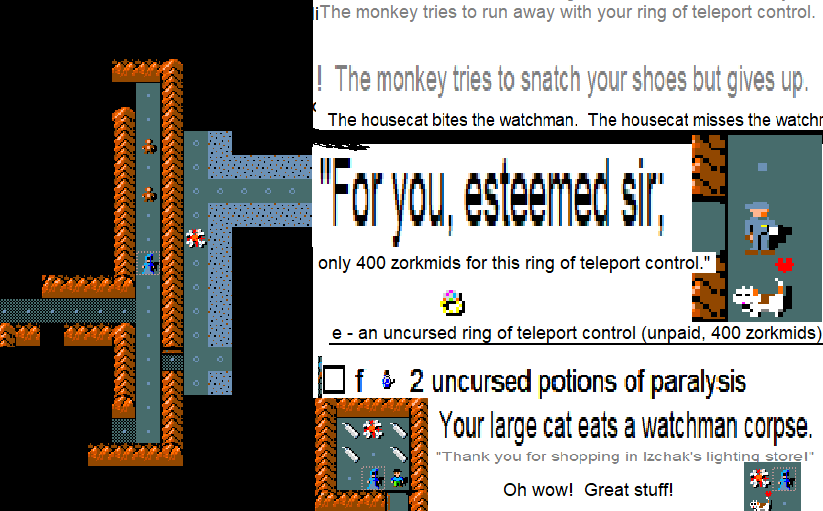
Patrick 2 pushed ahead through the hall of stone, opening a door into an intersection with many unseen paths before and behind him. Immediately from two directions, monkeys began to wheel down the hall toward Patrick. Patrick hefted his staff and swung at the first monkey to reach him, but it didn’t attack. Instead, it dodged Patrick’s swing and, grasping nimbly, slipped a ring from Patty’s finger. It began to run away, and before Patrick could even realize what was taken from him, the other monkeys leapt on him and stole more– his cloak, his gold. One of them even tried to make off with the shoes on his feet! The monkeys flew in every direction down different hallways.
All hell broke loose. Patrick noticed that his precious ring of teleport control was taken, but he didn’t know which monkey took it. Without hesitating further, he dashed north after a pair of monkeys. Throwing caution to the wind, he chased the monkeys past monsters, rooms, and strange watchmen. Patrick left his cat behind, who began immediately killing and eating gnomes, rats, and the human watchmen that prowled this level of the dungeon.
Patrick chased and slew monkeys with abandon. He followed one into a lit open space and found his cat, busy devouring a watchman. Patrick continued his chase into a shopkeeper’s chamber and finally cornered what appeared to be the last monkey. He slew it with a dagger, and the dead monkey dropped Patrick’s precious teleportation control ring on the ground of the store. The shopkeeper smiled.
“For you, esteemed sir; only 400 zorkmids for this ring of teleport control.”
Izchak, the purveyor of Minetown’s lighting shop, took the ring and offered to sell it back to Patrick for a hefty price. Patrick was rich, of course, somehow amassing over 900 zorkmids during the early days of his quest, but the thought of buying his own ring made him uneasy. Noises outside indicated that the cat was still fighting and murdering outside. Patrick considered throwing some paralysis potions at Izchak. Then he considered trying to fight him outright, but he had a feeling the shopkeeper was used to rabble and wouldn’t go down easy. Suddenly, an imp appeared at the door of the shop.
“I would fart in thy direction, but it would improve thy smell!”
Patrick and the Imp did battle for a time, and Patrick was wounded deeply. Feeling desperate, he finally began to loose all of his magical power upon the imp. He fired volley after volley of wizard blast at the imp until it exploded and died. Patrick promptly paid the shopkeeper for his ring and stepped outside and reunited with his cat. With the ring of teleport control coupled with his ring of teleportation, Patrick could instantly travel to any location on the dungeon floor. He thought this was a pretty important ability and didn’t want to lose it. It could save his life in a pinch!
A strange yellow slime mold approached Patrick and his cat slew it. He decided to eat the mold to try and absorb its intrinsic characteristics and become more powerful.
Wow! Great stuff!
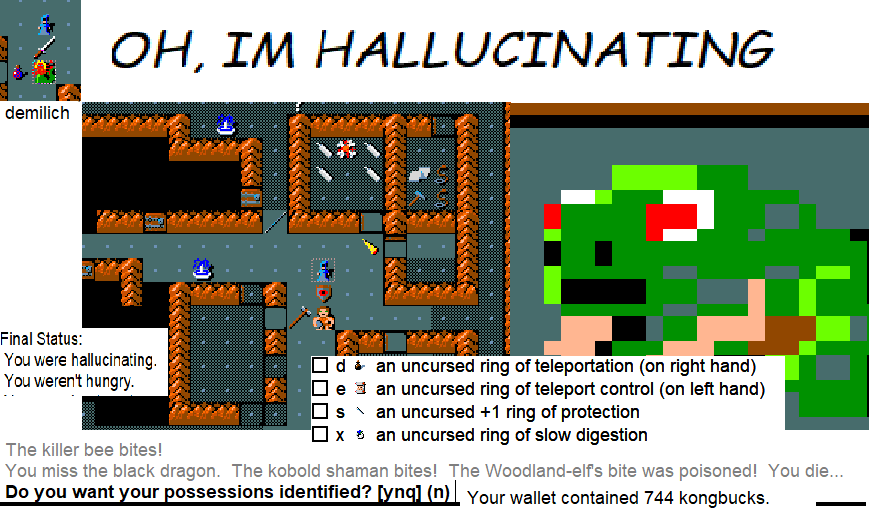
A demilich, a really terrifying indescribable demon, suddenly appeared before Patrick. He freaked out and blinked. A unicorn’s horn appeared, and the demon was replaced with a cave man. Weird stuff started happening all around Patrick, like the whole world was flickering around him.
A frog creature appeared and Patrick decided to battle it. It became a killer bee and bit him. Patrick swung at it with his staff and a dragon appeared before him. Patrick somehow missed it. The shifting form bit him and Patrick sickened and died on the spot.
Yeah, Patrick was hallucinating from eating a yellow slime mold. The demilich was actually his cat, and the ferocious killer bee dragon shaman was actually a rabid rat. The rat bit Patrick and he contracted rabies and died.
Darn! My best run yet, by far!
~ ~ ~
That, my friends, is NetHack. It was released in the 1980s, but the interactions of all the different elements of the game engine are so open ended that emergent gameplay narratives arise naturally throughout the game world. The monkeys made off with Patrick 2’s valuables, were chased through Minetown, and dropped their stolen goods inside a shop. The shopkeeper claimed the items for himself and would not let Patrick leave without paying the price. Meanwhile, chaos from Patrick’s cat outside and the constant flow of monsters through the town added to the confusion of the moment, giving me as the player less time to think all of my decisions through.
I was deeply riveted! And I was also really sad that I died. It was a funny death, but I would have liked to keep playing.
I have played many lives since, probably 20+, but none have made it back to Minetown. Many of my deaths are more mundane: starving to death while stumbling through barren caverns, or being attacked by water moccasins because I quaffed from a well, or dying from a cave in because I read an evil scroll.
Basically, taking risks in NetHack can result in instant death. But sometimes the risks are hilarious and need to be taken! Hopefully I will improve with time and be able to tell which risks are worth taking and when..?
PS:
hungers not I
darts I let fly
for sport I hunt thee
till sun end my spree

I went on a date with a pretty Mexican lass recently, and the experience pumped new life into my withering heart. We ate plantains and fried goat at a local Caribbean restaurant. We got some fancy drinks and talked long into the evening. It was really refreshing!
The next day at work, still smiling, I pulled out this classic:
El Paso is a ballad originally written by Marty Robins. It tells the story of a man smitten with a Mexican lass at the local bar. One day, he catches her sharing a drink with a dashing young cowboy. The narrator shoots the cowboy dead in a duel and flees the scene. His love for the maiden is so strong that he eventually returns to El Paso to see her and dies in the attempt.
I didn’t know that Grateful Dead covered the song live! The entire Red Rock set is so amazing, but their cover of El Paso is especially great because it takes Marty Robins’s slow, repetitive ballad and speeds the adventure along with plenty of flourishes and pretty guitar noises.
Of course, the original is an absolute classic:
We love a good storytelling western song. The climax of the story is such an upswell of drama as the singer comes under fire by mounted cowboys.
Something is dreadfully wrong, for I feel
A deep burning pain in my side
Though I am trying to stay in the saddle
I'm getting weary, unable to ride
But my love for Feleena is strong, and I rise where I've fallen
Though I am weary, I can't stop to rest
I see the white puff of smoke from the rifle
I feel the bullet go deep in my chest
The Marty Robbins version does the climax better, I’d say, even if the Grateful Dead version is faster and more pleasing to the ear throughout.
O! To die for a woman! A few years ago I would have wanted nothing to do with any girl ever, but time revolves the heart and now I want some drama and romance in my life.